Kala itu ngobrol dengan kawan yang akan membangun sports club di area Tangsel, dengan konsep fresh menggabungkan multi-sport seperti padel, basket, badminton, cafe, dan community lounge, kalau dipetakan lewat PMI SPM 5th Edition, ternyata mengikuti struktur program yang sama persis dengan proyek korporasi — lengkap dengan risknya di tiap level.
Showing posts with label project management. Show all posts
Showing posts with label project management. Show all posts
Wednesday, September 16, 2026

Wednesday, July 16, 2025
Kita percaya, tidak ada project apapun scale nya, yang berhasil
Kita percaya, tidak ada project apapun scale nya, yang berhasil hanya karena keberuntungan saja.
Friday, November 26, 2021
Project Risk Management Professional PMI-RMP Updates 2021-2022

The new exam PMI-RMP covers the following five domains:
- Risk Strategy and Planning
- Risk Identification
- Risk Analysis
- Risk Response
- Monitor and Close Risks
with situational cases mostly on Agile, Hybrid and the rest would be predictive.
Wednesday, November 03, 2021
PMP success feature: interview questions
Thanks for sharing your exam experience and study tips with the PM community. Your insights will be a great help to the exam aspirants.
Here are the interview questions I wanted to ask you -
1. What made you take up PMP? Did you consider any other certification exams?
At present, I am not considering additional certifications other than those offered by PMI followed the PMP, such as the PMI-ACP, etc
Sunday, October 31, 2021
Tuesday, August 03, 2021
FAQ 10 & 13 | Project Communication & Stakeholder Management - wrnote
FAQ
Frequently Asked Question
PMBOK GUIDE 6th Edition:
Chapter 10 PROJECT COMMUNICATION MANAGEMENT
Chapter 13 Project Stakeholder Management
Pertanyaan (silahkan dijawab dan masing2nya merujuk ke halaman berapa di PMBOK):
1. Apa Objective dari Project Communications Management?
Apa tujuan dari Plan Communications Management?
Apa tujuan dari Manage Communications? Apa tujuan dari Monitor Communications?
Project Communications Management includes the processes necessary to ensure that the information needs of the project and its stakeholders are met through the development of artifacts and the implementation of activities designed to achieve effective information exchange.
Plan Communication Management is the process of developing an appropriate approach and plan for project communication activities based on the information needs of each stakeholder or group, available organizational assets, and the needs of the project.
Manage Communication is The process of ensuring timely and appropriate collection, creation, distribution, storage, retrieval, management, monitoring, and the ultimate disposition of project information
Monitor Communication is The process of ensuring the information needs of the project and its stakeholders are met.
page 359
2. Jelaskan dengan contoh, dimensi-dimensi dalam aktivitas komunikasi.
Communication activities have many dimensions, including but not limited to:
- Internal. Focus on stakeholders within the project and within the organization.
- External. Focus on external stakeholders such as customers, vendors, other projects, organizations, government, the public, and environmental advocates.
- Formal. Reports, formal meetings (both regular and ad hoc), meeting agendas and minutes, stakeholder briefings, and presentations.
- Informal. General communications activities using emails, social media, websites, and informal ad hoc discussions.
- Hierarchical focus. The position of the stakeholder or group with respect to the project team will affect the format and content of the message, in the following ways:
- Upward. Senior management stakeholders.
- Downward. The team and others who will contribute to the work of the project.
- Horizontal. Peers of the project manager or team.
- Official. Annual reports; reports to regulators or government bodies.
- Unofficial. Communications that focus on establishing and maintaining the profile and recognition of the project and building strong relationships between the project team and its stakeholders using flexible and often informal means.
- Written and oral. Verbal (words and voice inflections) and nonverbal (body language and actions), social media and websites, media releases.
page 361
Monday, July 26, 2021
Project Procurement Management | update Aug 2021
CHAPTER 12. Project Procurement Management
Frequently Asked Questions (FAQ)
1. Sebutkan proses – proses didalam project procurement management
- Plan Procurement Management
- Conduct Procurements
- Control Procurements
2. Sebutkan dasar – dasar konsep yang terkandung didalam project procurement management
The Project Procurement Management processes involve agreements that describe the relationship between two parties—a buyer and a seller. Agreements can be as simple as the purchase of a defined quantity of labor hours at a specified labor rate, or they can be as complex as multiyear international construction contracts. The contracting approach and the contract itself should reflect the simplicity or complexity of the deliverables or required effort and should be written in a manner that complies with local, national, and international laws regarding contracts.
Project Risk Management | update
CHAPTER 11. PROJECT RISK MANAGEMENT
Frequently Asked Questions (FAQ)
1. Apa tujuan dari Project Risk Management?
The objectives of project risk management are to increase the probability and/or impact of positive risks and to decrease the probability and/or impact of negative risks, in order to optimize the chances of project success.
2. Apa tujuan dari Plan Risk Management?
to defining how to conduct risk management activities for a project.
3. Sebutkan elemen dari risk management plan?
Risk strategy
Methodology
Roles and responsibilities
Funding
Timing
Risk categories
Project Communication Management
CHAPTER 10. PROJECT COMMUNICATION MANAGEMENT Frequently Asked Questions (FAQ)
1. Apa Objective dari Project Communications Management? Apa tujuan dari Plan Communications Management? Apa tujuan dari Manage Communications? Apa tujuan dari Monitor Communications?
Project Communications Management includes the processes necessary to ensure that the information needs of the project and its stakeholders are met through the development of artifacts and implementation of activities designed to achieve effective information exchange.
Plan Communication Management is the process of developing an appropriate approach and plan for project communication activities based on the information needs of each stakeholder or group, available organizational assets, and the needs of the project.
Manage Communication is The process of ensuring timely and appropriate collection, creation, distribution, storage, retrieval, management, monitoring, and the ultimate disposition of project information
Monitor Communication is The process of ensuring the information needs of the project and its stakeholders are met.
FAQ 8 & 9 | PROJECT QUALITY MANAGEMENT | PROJECT RESOURCE MANAGEMENT
FAQ Frequently Asked Question PMBOK GUIDE 6th Edition:
Chapter 08 PROJECT QUALITY MANAGEMENT
Chapter 09 PROJECT RESOURCE MANAGEMENT

1. Apakah tujuan konsep mempelajari Project Quality Manajement ?
Project Quality Management includes the processes for incorporating the organization’s quality policy regarding
planning, managing, and controlling project and product quality requirements in order to meet stakeholders’ objectives.
Project Quality Management also supports continuous process improvement activities as undertaken on behalf of the performing organization.
page.271
2. Sebutkan nama-nama proses yang merupakan bagian dari Knowledge Area PQM serta tujuan (konteks) dari masing masing proses tersebut.
8.1 Plan Quality Management
The process of identifying quality requirements and/or standards for the project
and its deliverables, and documenting how the project will demonstrate compliance with quality requirements and/
or standards.
8.2 Manage Quality
The process of translating the quality management plan into executable quality activities that
incorporate the organization’s quality policies into the project.
8.3 Control Quality
The process of monitoring and recording the results of executing the quality management
activities to assess performance and ensure the project outputs are complete, correct, and meet customer expectations.
page.271
Project Resource Management | Input Tools & Technique Output
Project Resource Management
1. Plan Resource Management - Planning
The processes of defining how to estimate, acquire, manage, and utilize physical and resources.
Inputs
- Project Charter
- Project Management Plan
- Project Documents
- Enterprise Environmental Factors
- Organizational Process Assets
Tools & Techniques
- Expert Judgment
- Data Representation
- Organizational Theory
- Meetings
Outputs
- Resource Management Plan
- Team Charter
- Project Documents Updates
Monday, July 12, 2021
PROJECT COST MANAGEMENT | FAQ | PMBOK GUIDE 6th Edition
FAQ
Frequently Asked Question
PMBOK GUIDE 6th Edition:
Chapter 07 PROJECT COST MANAGEMENT
Pertanyaan (silahkan dijawab dan masing2nya merujuk ke halaman berapa di PMBOK):
1. Mengapa perlu ada Project Cost Management? Apa definisi dan tujuan dari empat proses
dalam Project Cost Management?
Mengapa perlu Project Cost Management:
- Project cost management ada sebagai control dan pengarahan tentang bagaimana biaya proyek akan
dikelola sepanjang proyek dilaksanakan.
- As a processes involved in planning, estimating, budgeting, financing, funding,
managing, and controlling costs so that the project can be completed within the approved budget.
page.231
Apa definisi dan tujuan dari empat proses dalam Project Cost Management
- 7.1 Plan Cost Management—The process of defining how the project costs will be estimated, budgeted, managed, monitored, and controlled.
- 7.2 Estimate Costs—The process of developing an approximation of the monetary resources needed to complete project work.
- 7.3 Determine Budget—The process of aggregating the estimated costs of individual activities or work packages to establish an authorized cost baseline.
- 7.4 Control Costs—The process of monitoring the status of the project to update the project costs and manage changes to the cost baseline.
page 231
2. Apa saja isi dari Project charter yg dipakai untuk input Plan Cost Management? Apa saja
informasi yang terkandung dalam Cost Management Plan?
- Project Charter sebagai Input Plan Cost Management
- Preapproved financial resources. The project charter provides the preapproved financial resources from which the detailed project costs are developed.
- Project approval requirements. The project charter also defines the project approval requirements that will influence the management of the project costs.
- Informasi didalam Cost Management Plan
The cost management processes and their associated tools and techniques are documented in the cost management plan.
For example, the cost management plan can establish the following:
- Units of measure. Each unit used in measurements (such as staff hours, staff days, or weeks for time measures; meters, liters, tons, kilometers, or cubic yards for quantity measures; or lump sum in currency form) is defined for each of the resources.
- Level of precision. This is the degree to which cost estimates will be rounded up or down (e.g., US$995.59 to US$1,000), based on the scope of the activities and magnitude of the project.
- Level of accuracy. The acceptable range (e.g., ±10%) used in determining realistic cost estimates is specified, and may include an amount for contingencies.
- Organizational procedures links. The work breakdown structure (WBS) (Section 5.4) provides the framework for the cost management plan, allowing for consistency with the estimates, budgets, and control of costs. The WBS component used for the project cost accounting is called the control account. Each control account is assigned a unique code or account number(s) that links directly to the performing organization’s accounting system.
- Control thresholds. Variance thresholds for monitoring cost performance may be specified to indicate an agreed-upon amount of variation to be allowed before some action needs to be taken. Thresholds are typically expressed as percentage deviations from the baseline plan.
- Rules of performance measurement. Earned value management (EVM) rules of performance measurement are set. For example, the cost management plan may:
- Define the points in the WBS at which measurement of control accounts will be performed;
- Establish the EVM techniques (e.g., weighted milestones, fixed-formula, percent complete, etc.) to be employed; and
- Specify tracking methodologies and the EVM computation equations for calculating projected estimate at completion (EAC) forecasts to provide a validity check on the bottom-up EAC.
- Reporting formats. The formats and frequency for the various cost reports are defined.
- Additional details. Additional details about cost management activities include but are not limited to:
- Description of strategic funding choices,
- Procedure to account for fluctuations in currency exchange rates, and
- Procedure for project cost recording.
page.239
3. Mengapa Schedule dan Risk Management Plan berperan dalam merencanakan Cost
Management Plan?
Sebagai input dari Cost Management Plan
- Schedule management plan. Described in Section 6.1.3.1. The schedule management plan establishes the criteria and the activities for developing, monitoring, and controlling the schedule. The schedule management plan provides processes and controls that will impact cost estimation and management.
- Risk management plan. Described in Section 11.1.3.1. The risk management plan provides the approach for identifying, analyzing, and monitoring risks. The risk management plan provides processes and controls that will impact cost estimation and management.
page 236
Monday, July 05, 2021
PROJECT SCHEDULE MANAGEMENT | PMBOK GUIDE 6th Edition | FAQ
FAQ
Frequently Asked Question
PMBOK GUIDE 6th Edition:
Chapter 06 PROJECT SCHEDULE MANAGEMENT
Pertanyaan (silahkan dijawab dan masing-masingnya merujuk ke halaman berapa di PMBOK):
1. Apa Objective dan key concept dari Project Schedule management? Ada berapa proses
pada Project Schedule Management? Apa tujuan dari masing-masing proses?
Objective dan key concept dari Project Schedule management
- Project scheduling provides a detailed plan that represents how and when the project will deliver the products, services, and results defined in the project scope and serves as a tool for communication, managing stakeholders’ expectations, and as a basis for performance reporting.
- The project management team selects a scheduling method, such as critical path or an agile approach. Then, theproject-specific data, such as the activities, planned dates, durations, resources, dependencies, and constraints, are entered into a scheduling tool to create a schedule model for the project. The result is a project schedule


Proses pada Project Schedule Management dan tujuan masing-masing nya:
- 6.1 Plan Schedule Management—The process of establishing the policies, procedures, and documentation for planning, developing, managing, executing, and controlling the project schedule.
- 6.2 Define Activities—The process of identifying and documenting the specific actions to be performed to produce the project deliverables.
- 6.3 Sequence Activities—The process of identifying and documenting relationships among the project activities.
- 6.4 Estimate Activity Durations—The process of estimating the number of work periods needed to complete individual activities with the estimated resources.
- 6.5 Develop Schedule—The process of analyzing activity sequences, durations, resource requirements, and schedule constraints to create the project schedule model for project execution and monitoring and controlling.
- 6.6 Control Schedule—The process of monitoring the status of the project to update the project schedule and manage changes to the schedule baseline.
Page 173.
2. Bagaimana penerapan Schedule Management pada smaller projects dan larger projects?
For Smaller projects:
Defining activities, sequencing activities, estimating activity durations, and developing the schedule model are so tightly linked that they are viewed as a single process that can be performed by a person over a relatively short period of time. These processes are presented here as distinct elements because the tools and techniques for each process are different.
For Larger Projects:
Some of these processes are presented more fully in the Practice Standard for Scheduling
Page 173.
Friday, July 02, 2021
Perbedaan PMBOK versi 6 dengan PMBOK versi 7 tahun 2021
 PMBOK v7 sudah release per Juli 2021 ini, bisa akses di link https://www.pmi.org/pmbok-guide-standards/foundational/pmbok

Lalu apa perbedaan antara PMBOK v6 dengan PMBOK v7:
Wednesday, June 30, 2021
PROJECT SCOPE MANAGEMENT | FAQ | PMBOK GUIDE 6th Edition | 2021
FAQ
Frequently Asked Question
PMBOK GUIDE 6th Edition:
Chapter 05 PROJECT SCOPE MANAGEMENT
Pertanyaan (silahkan dijawab dan masing2nya merujuk ke halaman berapa di PMBOK):
1. Apakah objective dari Project Scope Management? Jelaskan perbedaan antara Product Scope dengan Project Scope.
Objective:
Project Scope Management includes the processes required to ensure that the project includes all the work required,
and only the work required, to complete the project successfully. Managing the project scope is primarily concerned with
defining and controlling what is and is not included in the project.
Page 129
Differences Product Scope vs Project Scope:
Product scope. The features and functions that characterize a product, service, or result.
Project scope. The work performed to deliver a product, service, or result with the specified features and functions. The term “project scope” is sometimes viewed as including product scope.
Page 131
Sunday, June 13, 2021
Role Project Manager | FAQ | PMBOK v6 edition
FAQ 3
Chapter 1 Introduction
Chapter 02 THE ENVIRONMENT IN WHICH PROJECT OPERATE
Chapter 03 THE ROLE OF PROJECT MANAGER

1. Apakah yang di maksud dengan Project Management ?
Manajemen proyek adalah penerapan pengetahuan, keterampilan, alat, dan teknik untuk kegiatan proyek untuk memenuhi
persyaratan proyek. Manajemen proyek dicapai melalui aplikasi yang tepat dan integrasi dari proses manajemen proyek yang diidentifikasi untuk proyek tersebut. Manajemen proyek memungkinkan organisasi untuk melaksanakan proyek
secara efektif dan efisien.
Project management is the application of knowledge, skills, tools, and techniques to project activities to meet the
project requirements. Project management is accomplished through the appropriate application and integration of the
project management processes identified for the project. Project management enables organizations to execute projects
effectively and efficiently.
PMBOK6 page 10, 47/976.
2. Apa yang dimaksud dengan sebuah Project dan dihasilkan dari suatu Project ?
Proyek adalah usaha sementara yang dilakukan untuk menciptakan produk, layanan, atau hasil yang unik.
A project is a temporary endeavor undertaken to create a unique product, service, or result.
Yang di hasilkan oleh project adalah:
Unique Product
Layanan
Hasil
Page 4, 41/976
3. Siapa yang dimaksud dengan Project Manager?
Manajer proyek adalah orang yang ditugaskan oleh melakukan organisasi untuk memimpin tim yang bertanggung jawab untuk mencapai tujuan proyek.
The project manager is the person assigned by the performing organization to lead the team that is responsible for achieving the project objectives.
Page 52, 89/976
Saturday, June 12, 2021
PROJECT INTEGRATION MANAGEMENT
FAQ - Frequently Asked Question
PMBOK GUIDE 6th Edition:
Chapter 04 PROJECT INTEGRATION MANAGEMENT
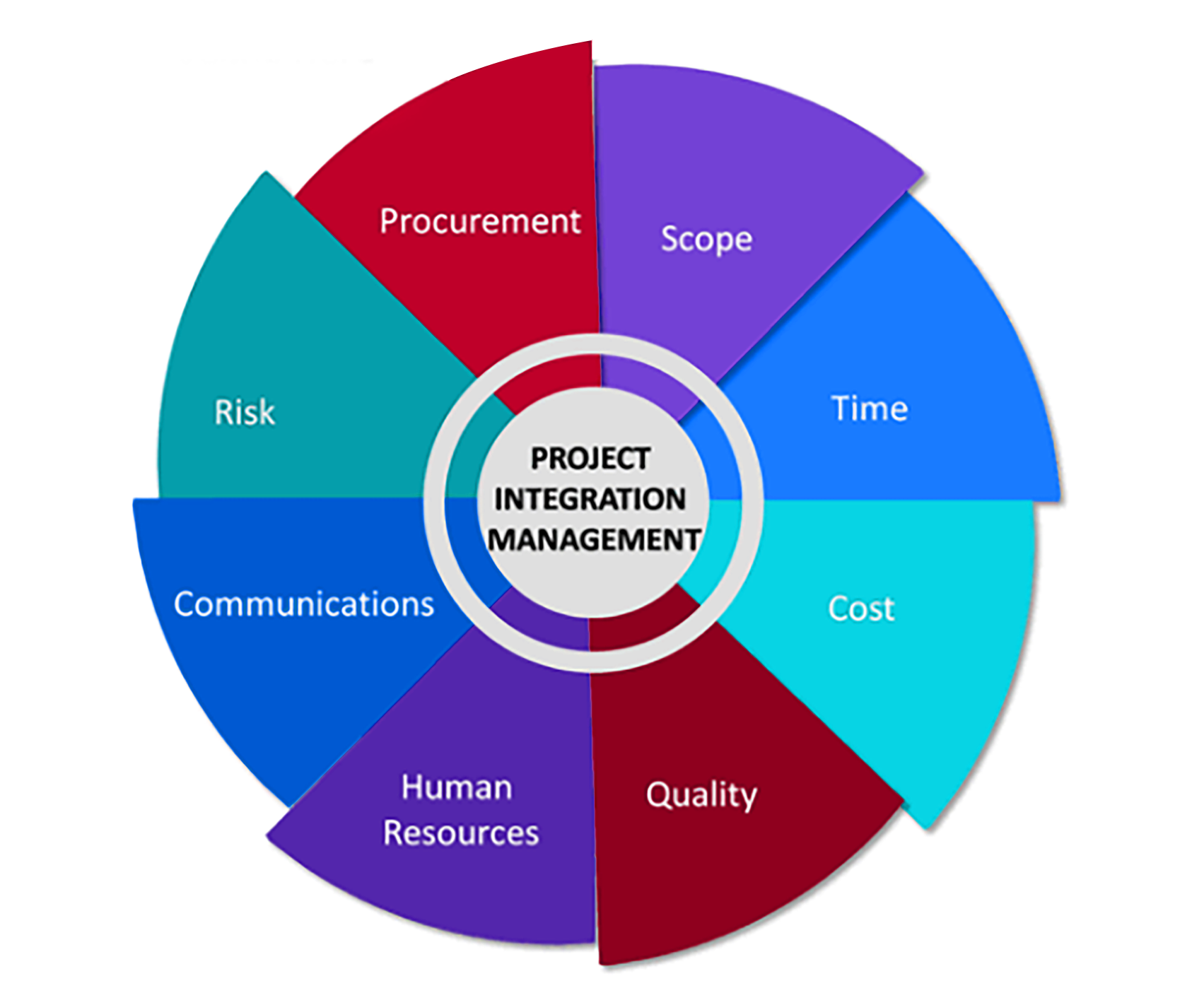
1. Apa maksud dan tujuan Project Integration Management?
Kumpulan aktivitas dan proses yang diperlukan untuk mengidentifikasi, mendefinisi, mengkombinasi, menyatukan dan mengkoordinasi berbagai proses dan aktivitas manajemen proyek dalam suatu proses yang berkesinambungan.
Wednesday, May 19, 2021
PMP Outline 2021
PMP Outline

DOMAIN 1 SDM
Mengelola konflik
Memimpin tim
Mendukung kinerja tim
Memberdayakan anggota tim dan pemangku kepentingan
Memastikan anggota tim/pemangku kepentingan dilatih secara memadai
Membangun tim
Menangani dan menghapuskan rintangan, halangan, dan hambatan tim
Menegosiasikan kesepakatan proyek
Berkolaborasi dengan pemangku kepentingan
Membangun pemahaman bersama
Mengikutsertakan dan mendukung tim virtual
Mendefinisikan aturan dasar tim
Membimbing pemangku kepentingan yang relevan
Mempromosikan kinerja tim melalui penerapan kecerdasan emosional
Subscribe to:
Posts (Atom)